
The Stone That Doesn’t Burn
Sintered stone is non-combustible by composition u2014 pure mineral, no resins, no organic content. A Material Study on the surface engineered for the parts of architecture that can't afford to fail.
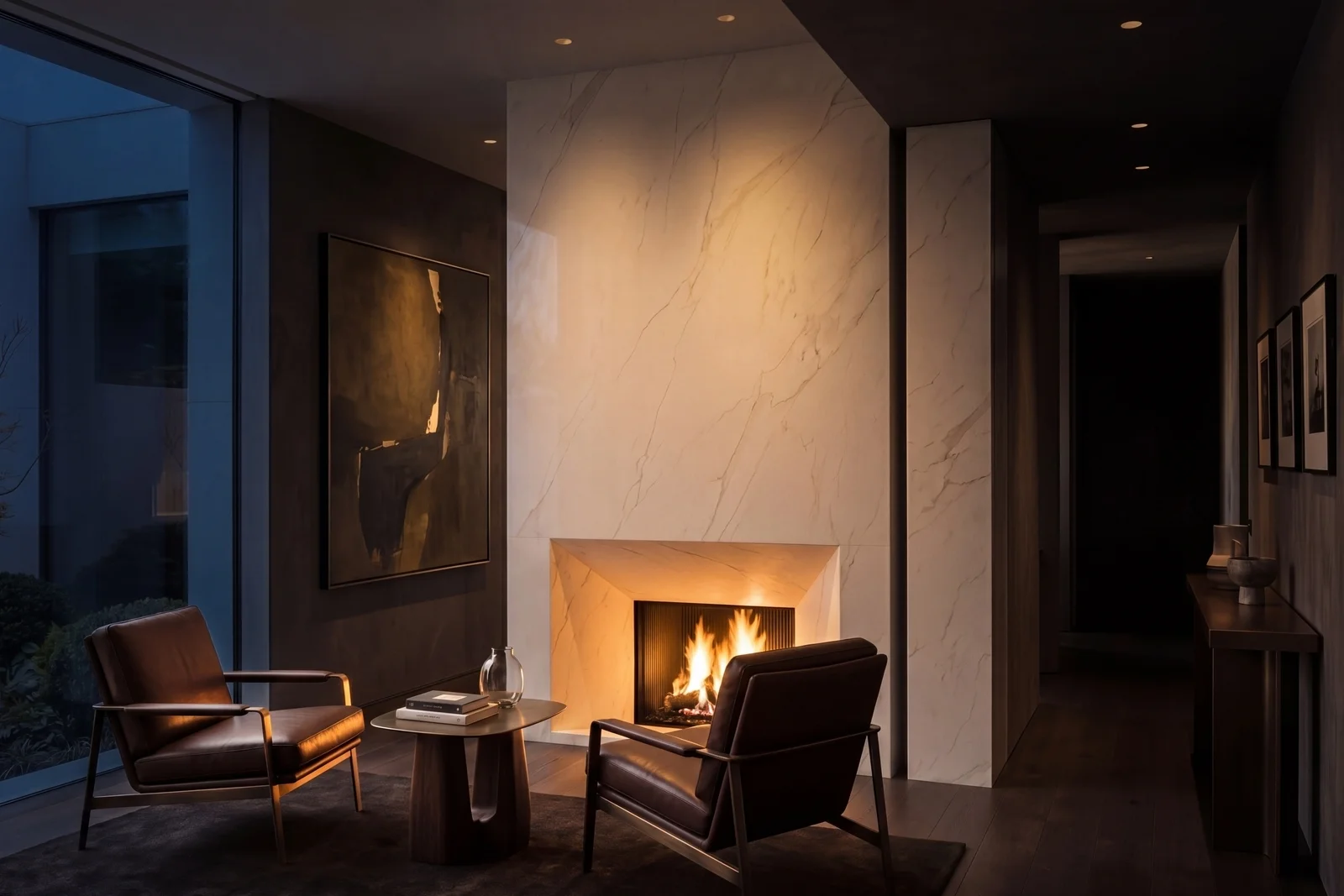
In this editorial
The engineered surface that refuses what fire, weather, and use try to do to it — and why architecture trusts it for the parts that can’t afford to fail.
The reason we use sintered stone for the most demanding architectural applications isn’t what it does. It’s what it refuses to do.
Moreno Ruaro — Technical Advisor, AGL Surfaces
If the previous editorial studied the natural quartz that depends on how it’s lit, this one studies its philosophical opposite: a material engineered to remain unchanged regardless of what acts on it. Cristallo behaves with its environment. Sintered stone behaves against it.
Most architectural materials can provide one or two of the following: fire resistance, UV stability, chemical resistance, or dimensional stability under heat and cold. Sintered delivers all of them at once. The reason is in how it’s made.
Origin
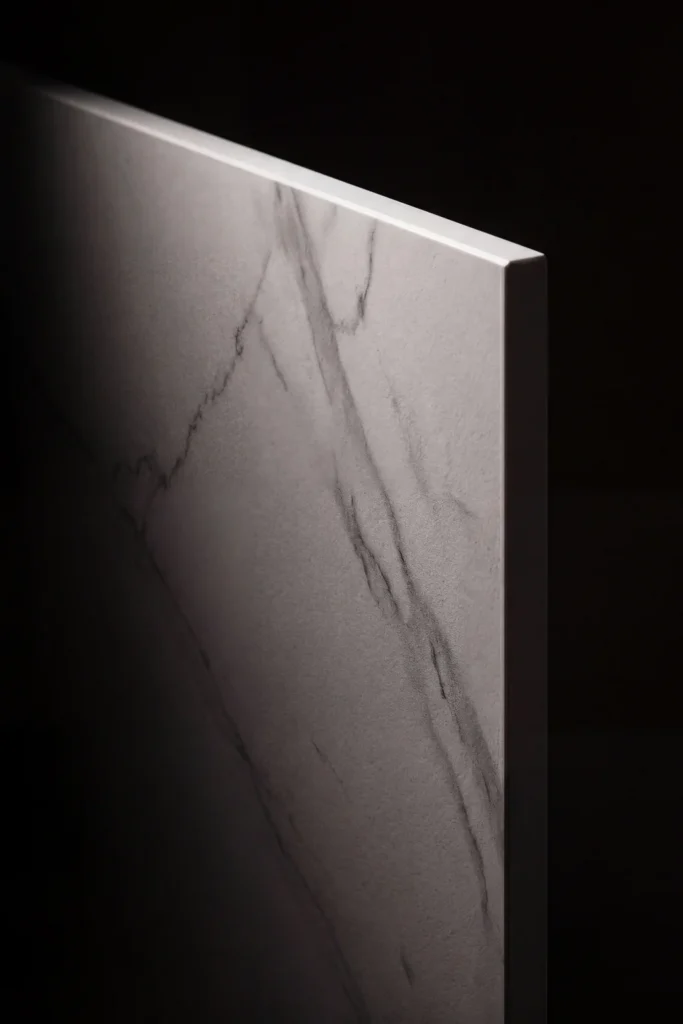
Sintered stone is formed when natural minerals are compressed under extreme heat and pressure until they fuse into a single, dense surface. The process mimics natural geological formation, the way granite or quartzite forms under tectonic pressure over millions of years, accelerated into a controlled industrial outcome.
What sintered contains is mineral: feldspar, silica, recycled stone fragments, and natural pigments. What it does not contain is the architectural difference: no resins, no polymers, no plastic binders, no off-gassing volatile compounds. There is nothing organic in the slab. Nothing that can burn, yellow, soften under heat, or react to chemicals.
This composition isn’t a simple manufacturing detail. It’s the foundation of everything that follows.
Behavior
What sintered stone does is best described by what it refuses to do.
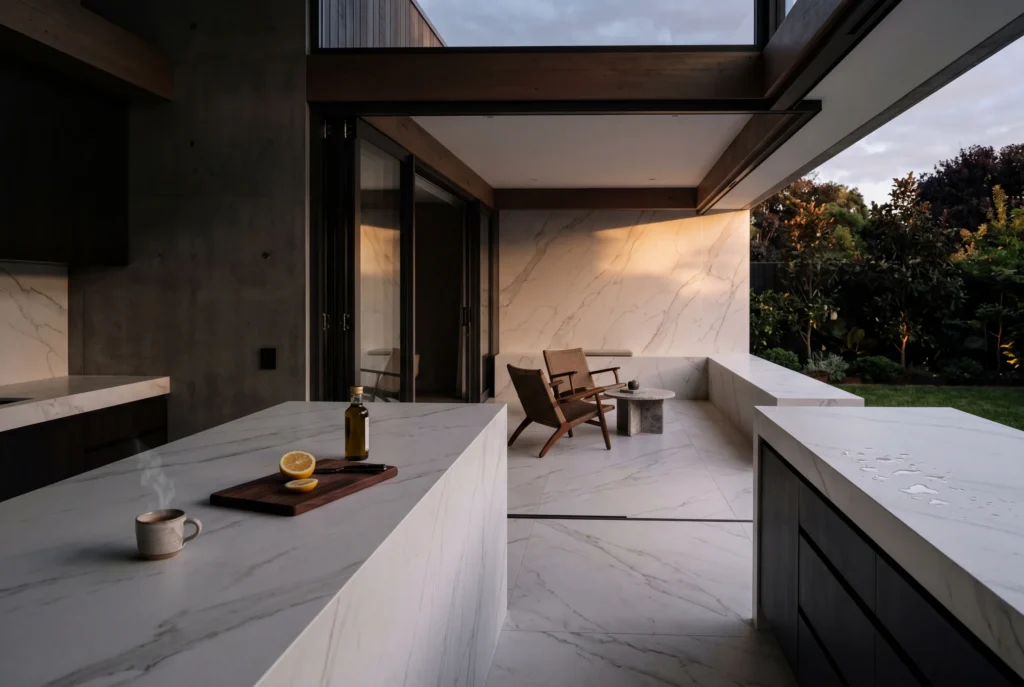
It does not burn. Sintered is non-combustible by composition. Meaning that it’s pure mineral, no resins, no binders, no organic content of any kind. The National Building Code of Canada defines non-combustibility through CAN/ULC-S114, a test that subjects the material to 750°C for fifteen minutes; sintered stone meets the criteria without difficulty. Engineered quartz cannot. Its 7–10% polymer resin content begins to soften, scorch, and discolour at roughly 150°C (well below the temperature of a pan just removed from the oven). Resin-bound surfaces are categorically combustible, regardless of how the underlying quartz behaves. Fire applied to a sintered slab does not ignite, smoke, or off-gas. Hot cookware leaves no mark; there is no resin to scorch. This is why sintered is specified for commercial façades, high-rise cladding, and any environment where building codes require non-combustible materials.
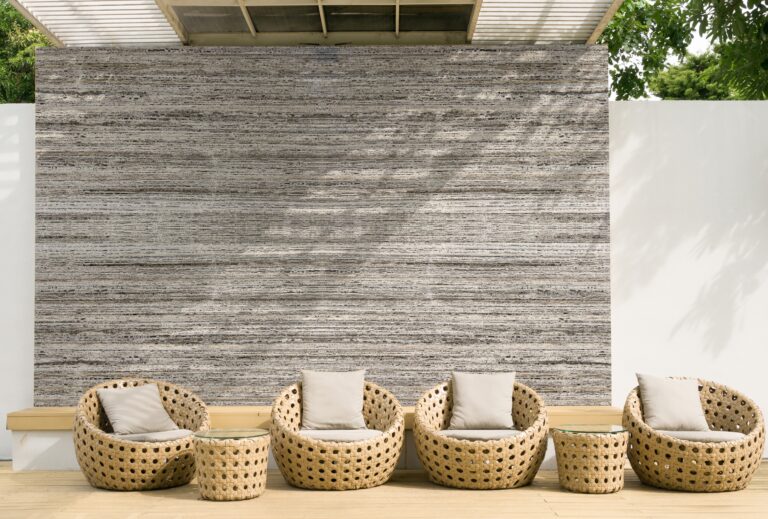
It does not fade. Direct sun exposure over years produces no colour shift, no yellowing, no dulling. The material is dimensionally and chromatically stable under UV indefinitely. There is no surface coating or pigment that can break down because there is no surface coating or pigment in the first place—the colour is the mineral, fused throughout the body of the slab.
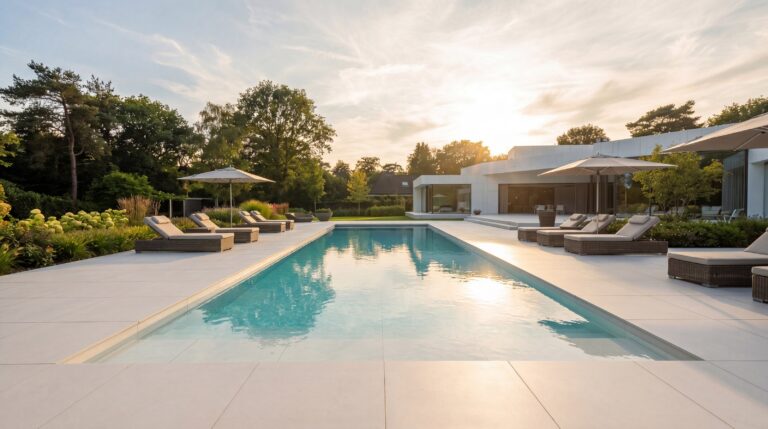
It does not crack. Freeze-thaw cycles, thermal shock, and rapid temperature change leave it unaffected. The same slab can sit in direct sunlight in summer and below freezing in winter without dimensional movement. Exposed applications are not compromises; they are the material in its element.
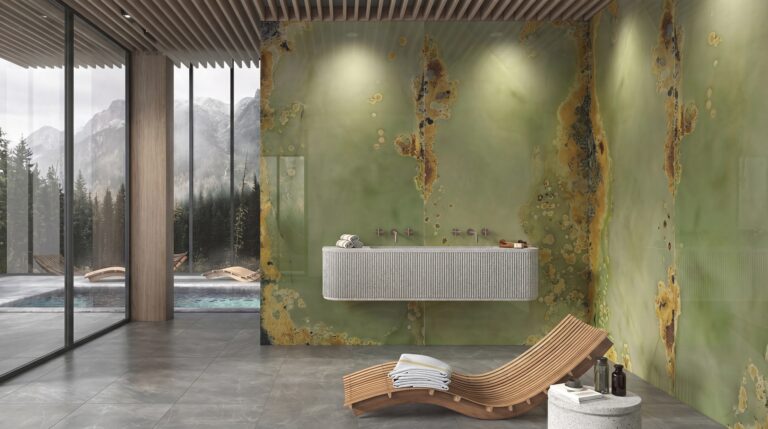
It does not stain. Zero porosity means no liquid penetrates the surface. Wine, oil, coffee, and acid all wipe off with a neutral cleaner. Sintered is the only premium surface that requires no sealer, no resealing schedule, and no heavy maintenance.
What you specify with sintered is the absence of failure modes. You’re not choosing a finish; you’re choosing everything that won’t happen.
What sintered stone refuses to do.
Heat
Heat resistant.
Stains
Stain resistant — no sealing required.
Water
Zero porosity and waterproof.
Process
The slab arrives at the fabricator dense, heavy, and dimensionally consistent. From there, the work is more forgiving than its competitors suggest.
Earlier generations of ultra-compact surfaces, the first wave of sintered materials, carried internal tension from manufacturing, making cutting unpredictable. Edges chipped. Mitre joints cracked. Fabrication studios developed elaborate protocols to compensate.
The contemporary material has resolved this. Internal tension is minimal, cutting is clean, and edge profiling holds. Fabricators who have worked with first-generation sintered surfaces are typically the most surprised by how predictable the current material is to handle. The improvement is not marginal. It is the difference between specifying hesitantly and specifying confidently.
For most applications, the slab is finished as it leaves the line, whether it be matte, polished, slate-textured, bush-hammered, or 3D-carved. Fabrication is mechanical: cut, profile, install. There is no curing, no sealing, no post-installation treatment.
Application
The applications that anchor sintered stone in contemporary architecture are those where the cost of material failure is highest.
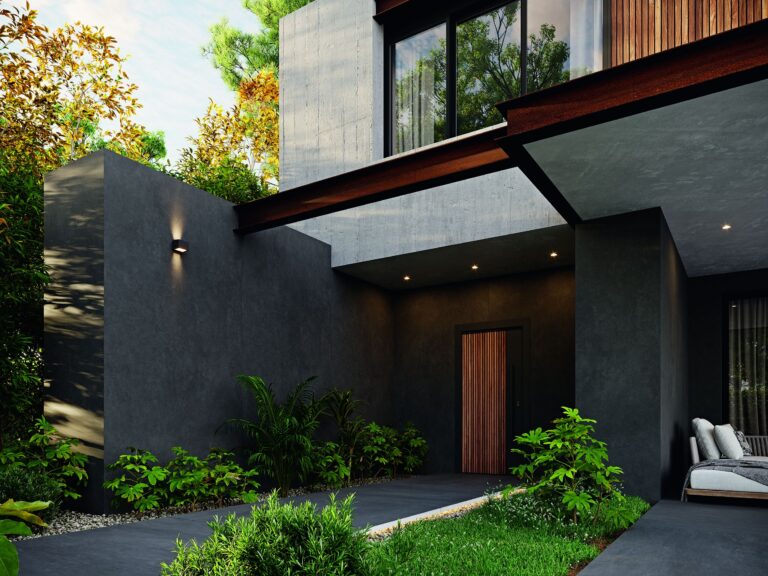
A multi-story ventilated façade must resist fire, UV, freeze-thaw, wind loads, and structural attachment stresses simultaneously for decades. Sintered’s combination of a non-combustible rating and dimensional stability makes it specifiable for tall buildings under modern fire codes. While porcelain might be challenged by freeze-thaw and quartz fails entirely outdoors, sintered remains untouched.
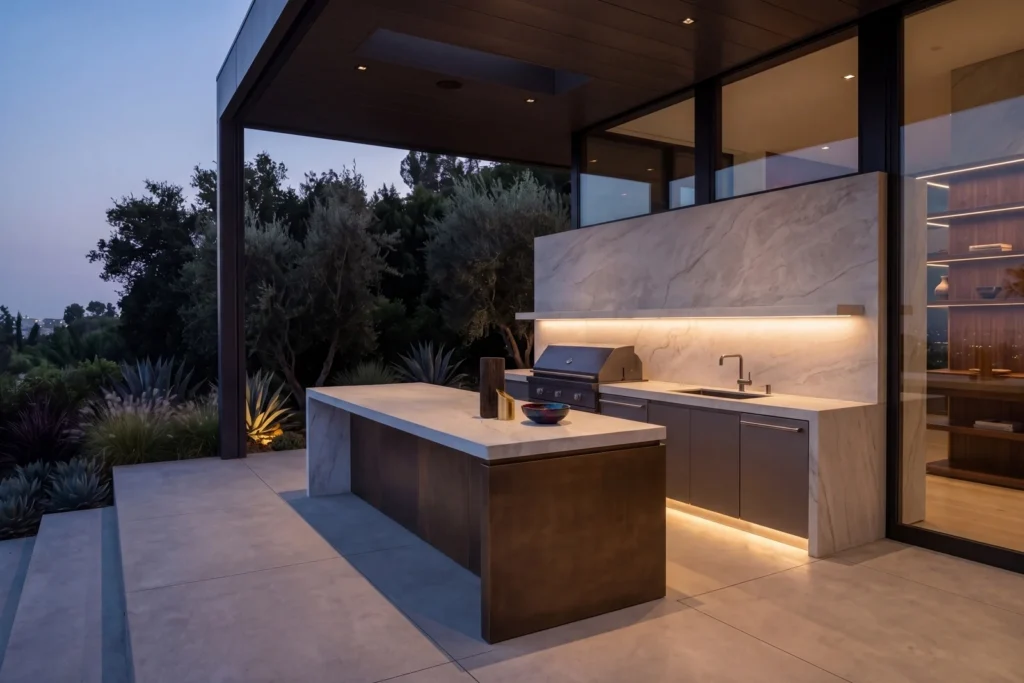
An outdoor kitchen sits next to a grill and is exposed to direct sunlight. It has to handle heat at close range, UV from above, weather from every direction, and food contact in between. Sintered passes all four without compromise. Hot cookware sets directly on the counter. Rain doesn’t stain it. The sun doesn’t fade it. Hygiene is intrinsic; the surface is non-porous and non-reactive.
Inside the home, the residential countertop solves a quieter set of problems. No resin means no off-gassing and no thermal-cookware risk. No porosity means no sealing schedule. No chemical reactivity means no staining from oils, acids, or wine. For kitchens that get used hard, sintered is the material that doesn’t accumulate the daily compromises that other surfaces collect over time.
Each of these applications is sintered stone delivering on the same promise from a different angle. The material doesn’t change its behaviour to suit the context. The context comes to the material.
Specification
A few principles hold when working with sintered.
Match thickness to application. Three to six millimetres for façades and wall cladding. Twelve millimetres for most countertops. Twenty millimetres for high-traffic exterior flooring or oversized horizontal spans. Thinner is not weaker for the right use; it is appropriate.
Match finish to wear. Matte finishes are the most scratch-resistant and the most forgiving in commercial environments. Polished finishes are better suited to vertical surfaces and feature walls than to heavy-traffic floors. Structured finishes — slate, bush-hammered — offer slip resistance for wet or exterior zones.
Trust the fabricator who has worked with it before. Sintered fabrication has matured, but a fabricator’s first project with the material is still slower than their tenth. Where possible, work with someone who has specified and installed it before.
Don’t over-specify maintenance. Sintered doesn’t need it. Neutral cleaner, soft cloth, no sealer, no annual treatment. The product literature is sometimes more elaborate than the actual care.
In closing
Most stone surrenders to something. Cristallo surrenders to light, and that surrender becomes its beauty. Sintered surrenders to nothing, and that refusal is what makes it the material of choice for the parts of architecture that can’t afford to be uncertain.
It is the material engineered for the assumption that architecture should last.
The materials that age longest in architecture are the ones that ask the least of the people living with them. Sintered asks for nothing.
Ivan Couto — President, AGL Surfaces
Continue reading.
All editorials →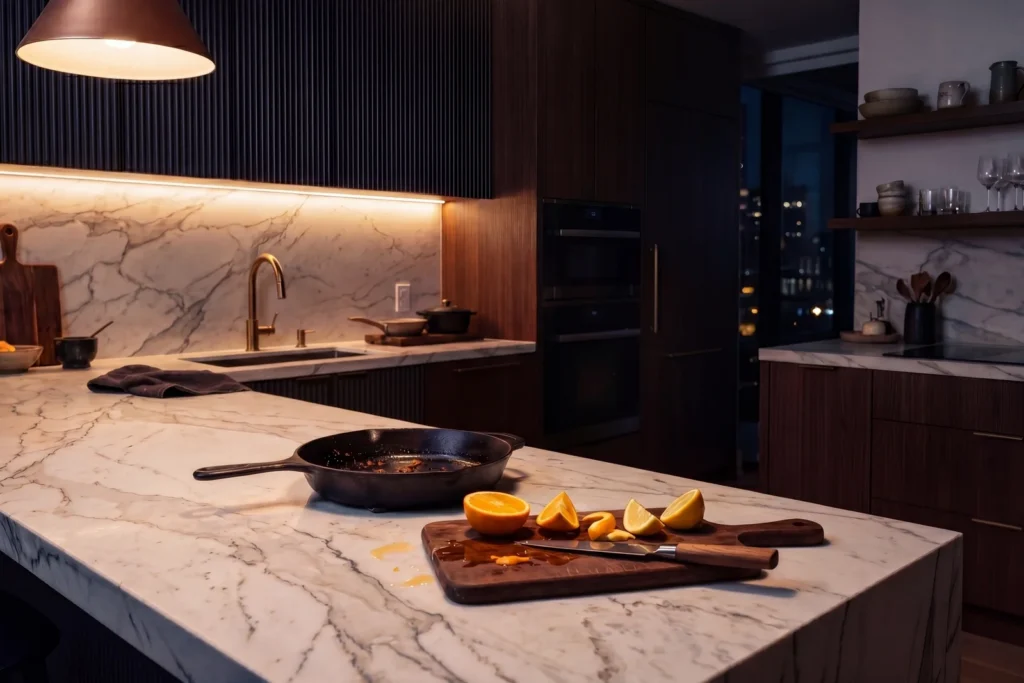 Material Intelligence · 6 min
Sintered Stone vs. Quartz
Sintered stone vs. quartz u2014 a composition-level comparison covering heat, UV, outdoor performance, stain resistance, maintenance, and when to specify each.
Material Intelligence · 6 min
Sintered Stone vs. Quartz
Sintered stone vs. quartz u2014 a composition-level comparison covering heat, UV, outdoor performance, stain resistance, maintenance, and when to specify each.
 Galleria Editorial · 7 min
The Anatomy of Light & Surface
A study in seven installations from inside the AGL Galleria: how light, shadow, and craft turn natural stone, sintered surfaces, and metalwork…
Galleria Editorial · 7 min
The Anatomy of Light & Surface
A study in seven installations from inside the AGL Galleria: how light, shadow, and craft turn natural stone, sintered surfaces, and metalwork…
 Material Study · 6 min
The Translucent Quartz
Cristallo is the natural quartz that doesn't behave like stone. It accepts light, holds it, and lets it through. A Material Study…
Material Study · 6 min
The Translucent Quartz
Cristallo is the natural quartz that doesn't behave like stone. It accepts light, holds it, and lets it through. A Material Study…