
The Anatomy of Light & Surface
A study in seven installations from inside the AGL Galleria: how light, shadow, and craft turn natural stone, sintered surfaces, and metalwork into architecture.
In this editorial
Most showrooms flatten material. Fluorescent ceilings strip stone of its dimensionality. Tile racks dilute slabs into samples. Surfaces become products.
The Galleria was built against that impulse.
I wanted a space where designers could see what stone actually does. Not under fluorescent light, not on a shelf, but in the architecture it deserves.
Ivan Couto — President, AGL Surfaces
Each installation here is staged the way a sculpture would be. That’s under directional light, in deep shadow, with the room’s architecture composed around it. The premise is simple: materials behave differently under proper light and intention. Restoring that condition is the work.
What follows is a study in seven installations. Each is built from materials carried in the AGL portfolio. Each isolates a different relationship between geology, light, and craft.
Geology, deconstructed
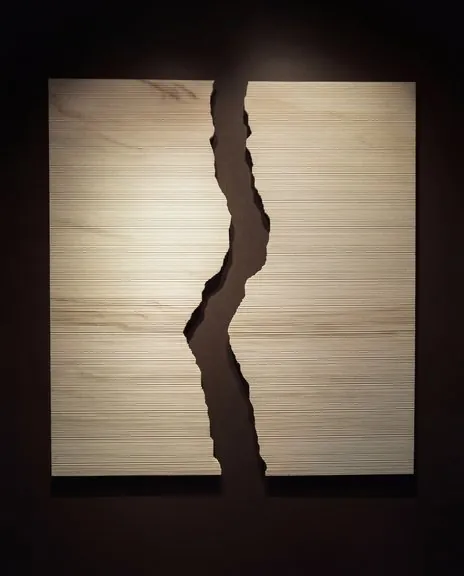
A panel of Bianco Lasa, finished in a bamboo-pattern texture, has been cut down its centre. The two halves don’t quite meet. Between them runs a deliberate cut that breaks the rhythm of the linear relief. It’s a single decisive line where the marble has been opened by hand, not broken.
It reads as a meditation on control and release — an engineered finish set against a single deliberate gesture.
The bamboo-pattern finish gives the surface a calm horizontal cadence, soft and repeating, controlled to the millimetre. The cut interrupts that order with something deliberate: a single decisive gesture, the surface opened on purpose rather than broken by chance.
The light source is overhead, raking. Without it, the surface would read as flat. With it, every furrow casts a parallel shadow, and the cut becomes the loudest line in the room.
Bianco Lasa is quarried in Italy, the country that anchors most of the natural stone in the Galleria. The choice is a quiet acknowledgement of the source.
The grammar of layered geometry
 Lattice
Stone
Lattice
Stone
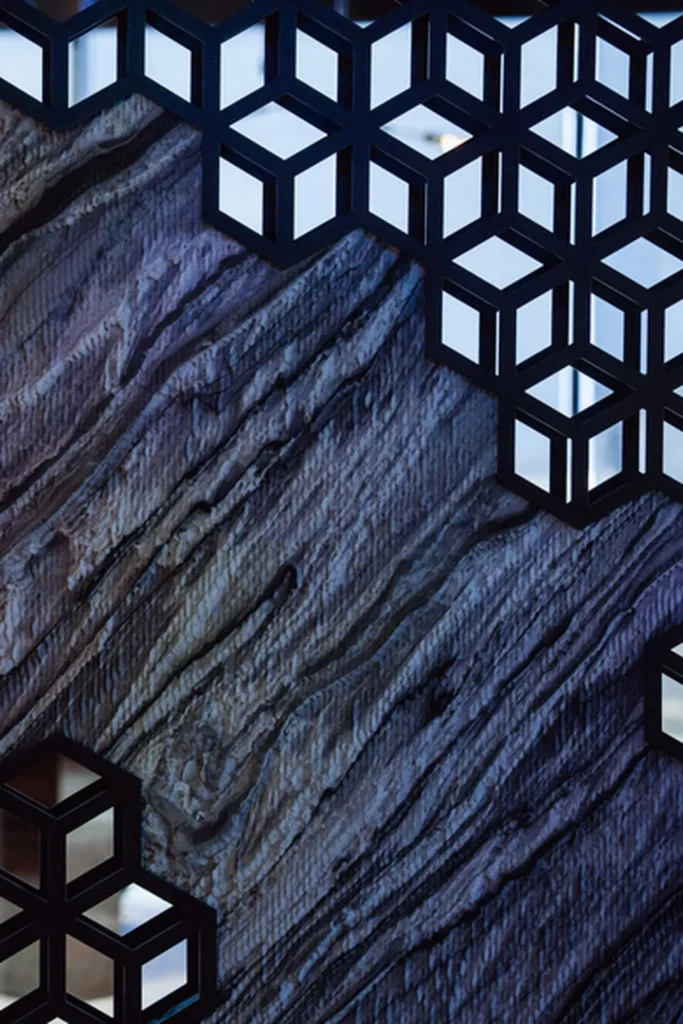
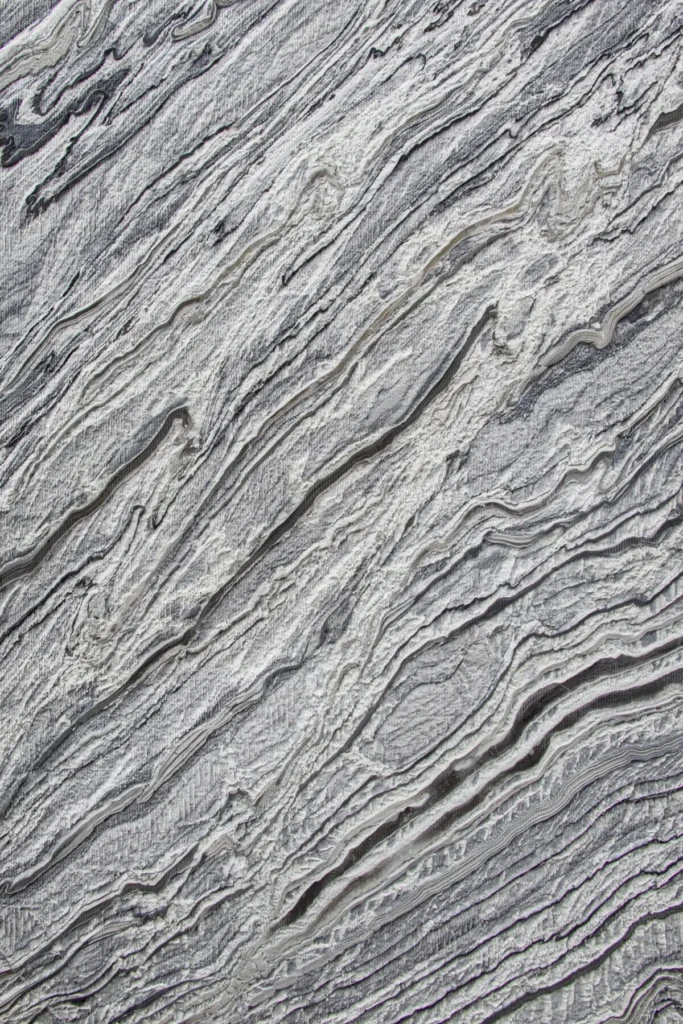
A panel of Silver Stream stone, finished in a hard-rock relief, sits behind a screen of laser-cut steel. It’s a geometric lattice rendered in pure black, repeating cube-form geometry that climbs the full height of the wall.
The two materials should not work together. One is engineered, repetitive, and modern. The other is mineral, irregular, and ancient.
But they do work together. The lattice introduces order; the stone introduces time.
The hard-rock finish is the most tactile of the textured-stone treatments; uneven, almost lunar, the stone left in something close to its raw state. Behind a geometric screen, that rawness becomes more visible, not less. The eye reads the geometry first, then drops through it to find a surface that predates the building it sits in by millions of years.
It is a study in how contrast can clarify.
Light made material
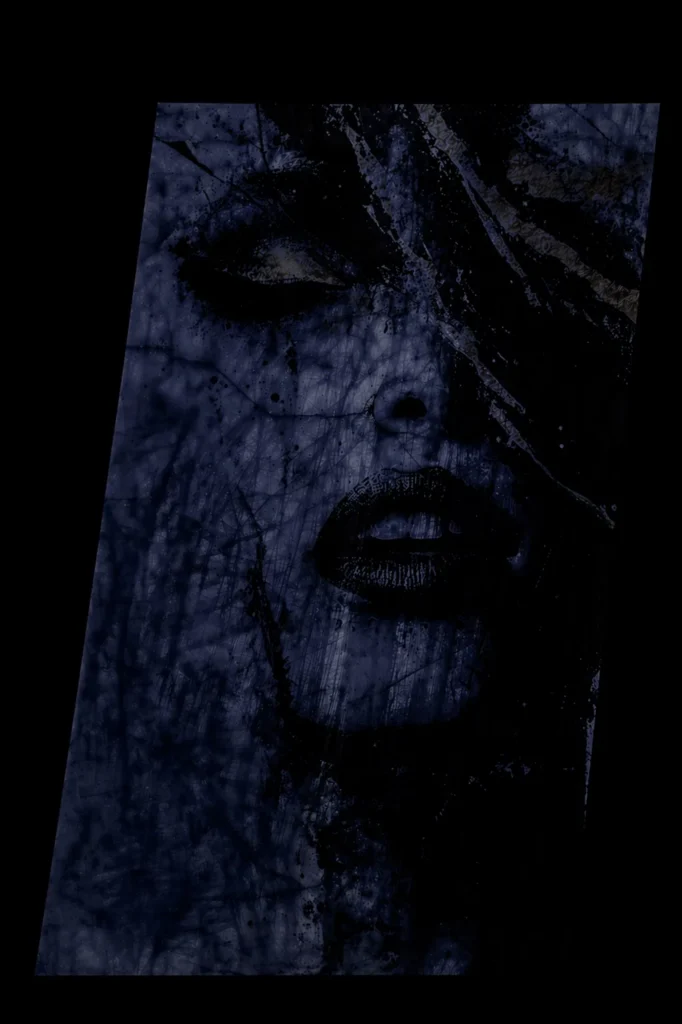
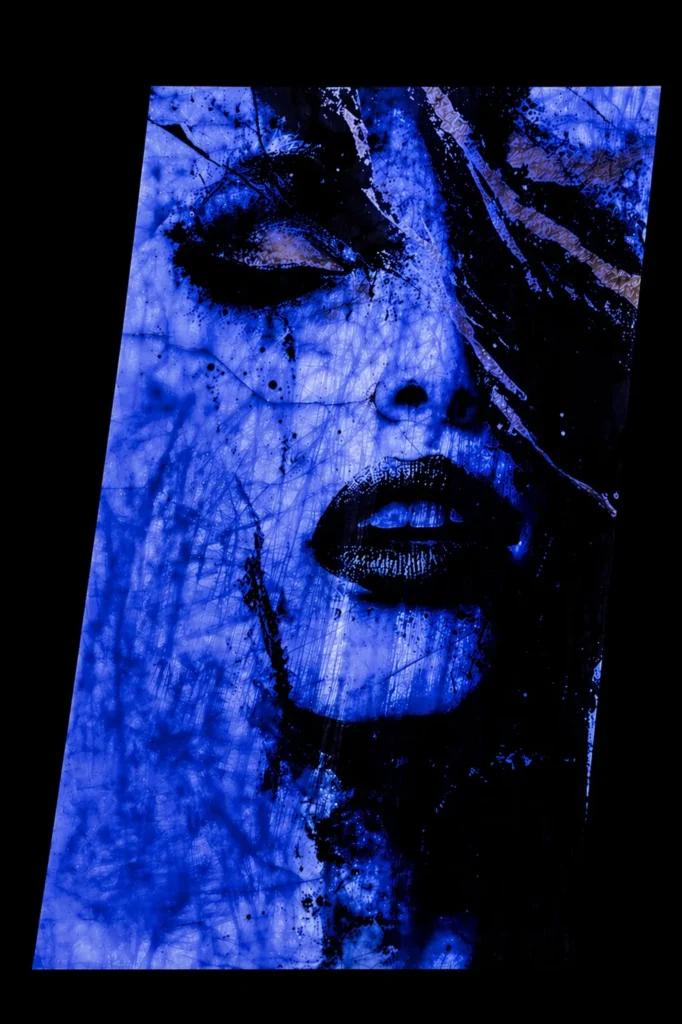
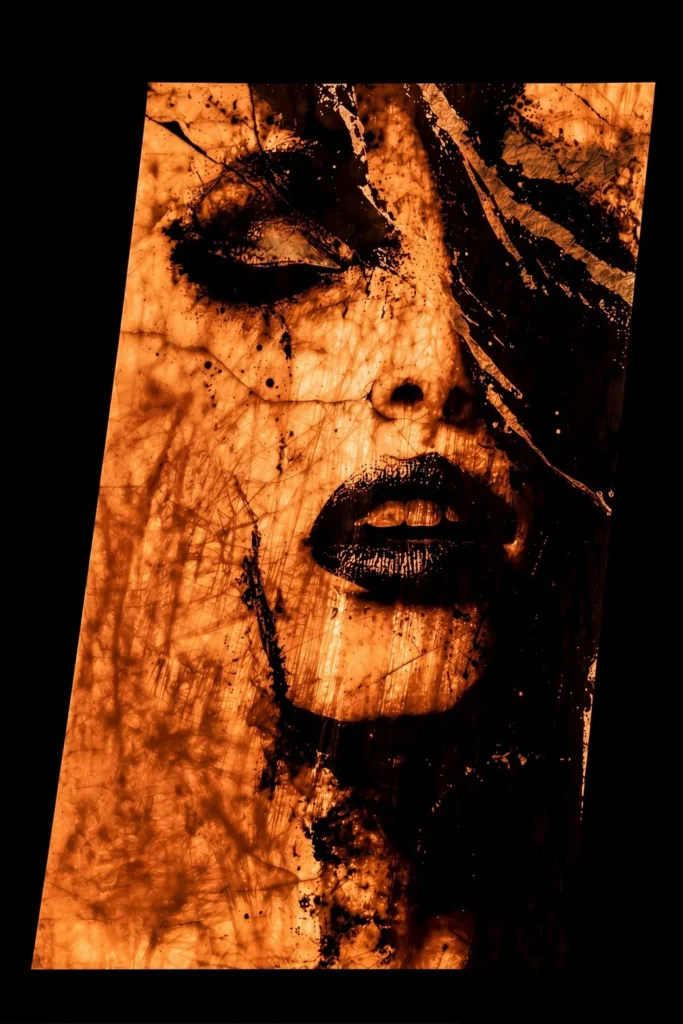
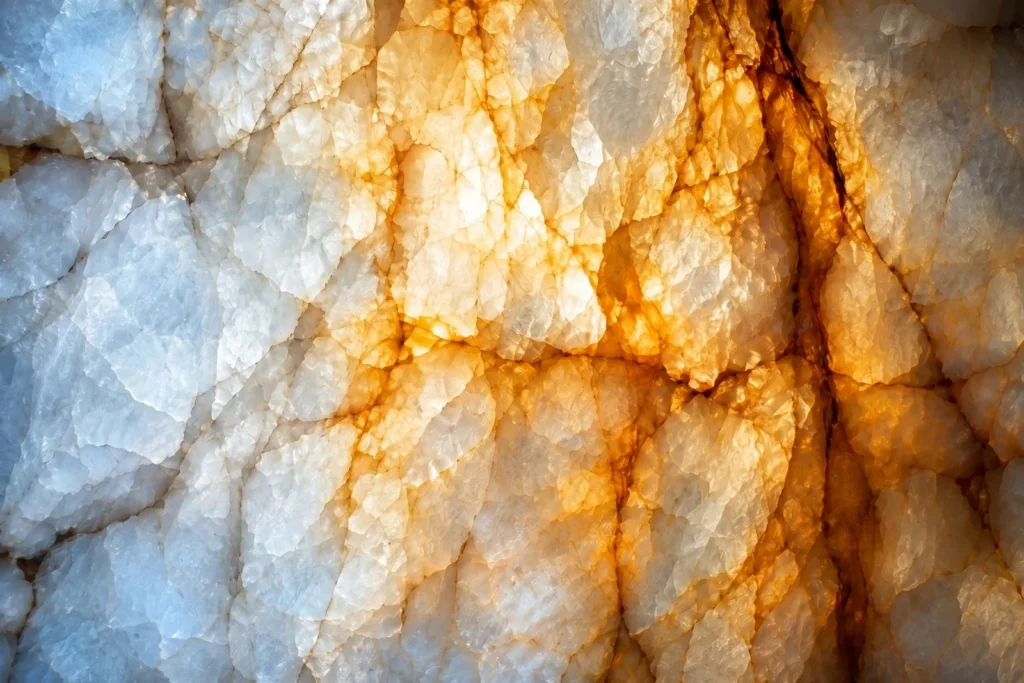
Cristallo is a natural quartz from Brazil. It’s one of the most popular translucent stones in the AGL portfolio. Its translucency is native to the stone, a natural crystalline quartz that carries light through its body with no added surface treatment. Its appearance carries the quality of glacial ice, threaded with dark amber veins. When backlit, it stops behaving like stone and starts behaving like atmosphere.
A single installation in the Galleria demonstrates the full range.
A fragmented portrait sits within the natural canvas of the stone. With the LEDs off, the work recedes, and the portrait becomes a quiet etching, the amber-veined crystal reading as the only colour in the panel. Switch the LEDs to a cool temperature, and the stone illuminates from within: vivid cobalt throws the portrait into a clinical, gallery-like feel. Switch them to warm, and the same panel recasts the room into intimate, residential, almost firelit. The portrait does not change. The light does. And the architecture of the space shifts with it.
This is what we mean when we describe light as a structural element. Cristallo is not lit. It is illuminated from within. The portrait is not a decoration. It is part of how the stone reveals itself.
Craft as inheritance
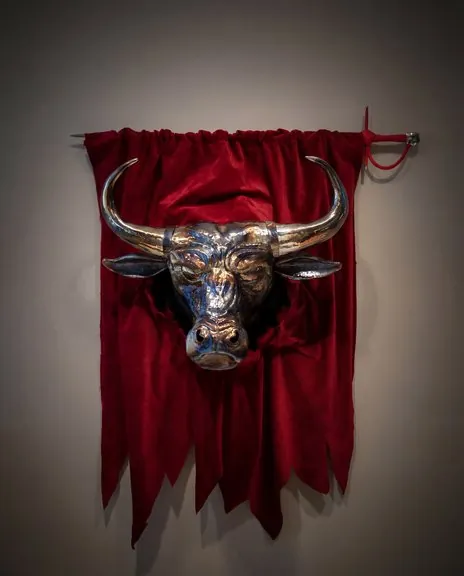
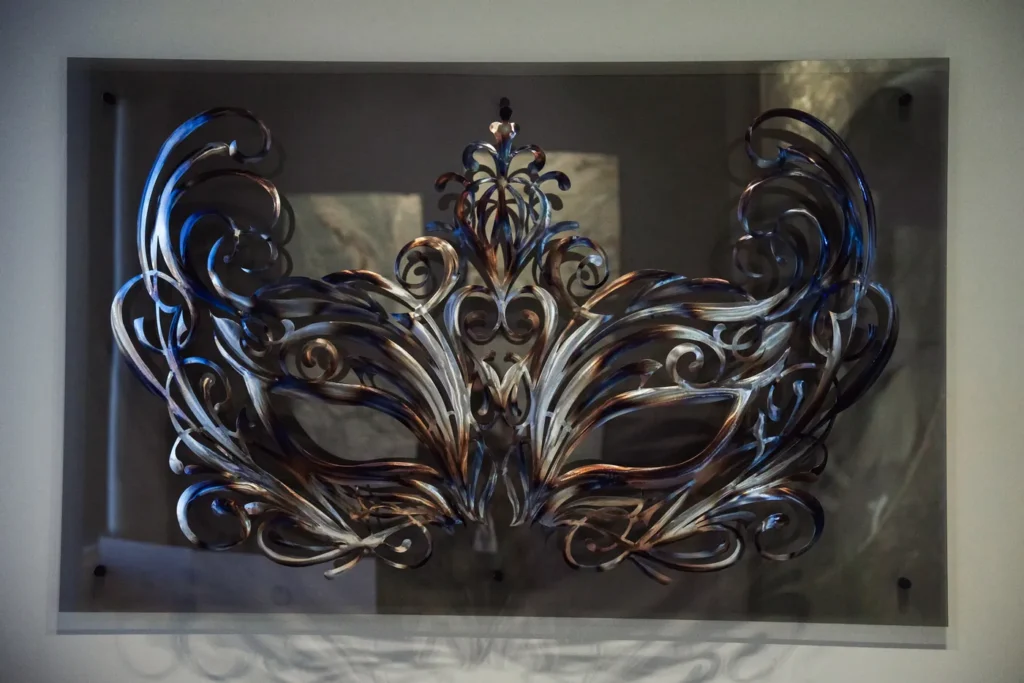
Two pieces in the Galleria, two makers, two tributes. Both are hand-cut raw mild steel flat sheets, opened by hand, hammered into curvature, welded, then heated until the steel begins to colour on its own.
The first is a Venetian filigree mask. Its inspiration is Italy, the country that supplies most of the Galleria’s natural stone. The mask reads as an homage to that source: ornate, theatrical, unmistakably Italian. The heated steel produces a blue-and-copper iridescence that catches under directional light and shifts as the viewer moves. The mask is the work of Rei Misiri of MEDĒIO Studios, in Toronto.
The second, by Trevor Farren of Imagine Metal Art in Dundas, Ontario, is a bull, mounted against a torn red matador’s cape. It is a tribute to Spain, the country that produces the Galleria’s sintered stone, just as Italy supplies its natural stone.
The cape is not incidental.
I felt the red cape gave it more feeling of actually being there, in Spain, watching the bullfighting. Trevor Farren — Imagine Metal Art
The bull took three weeks. The detail most people miss, Farren noted, is the hand hammering and the time required to coax curvature from flat steel.
The metal gives it a rugged, serious look. Basically saying, ‘I mean business‘, tearing through the cape of the matador. Trevor Farren — Imagine Metal Art
Two pieces. Two countries. Both are rich in culture, and both are handmade within an hour of the Galleria.
Setting as subject
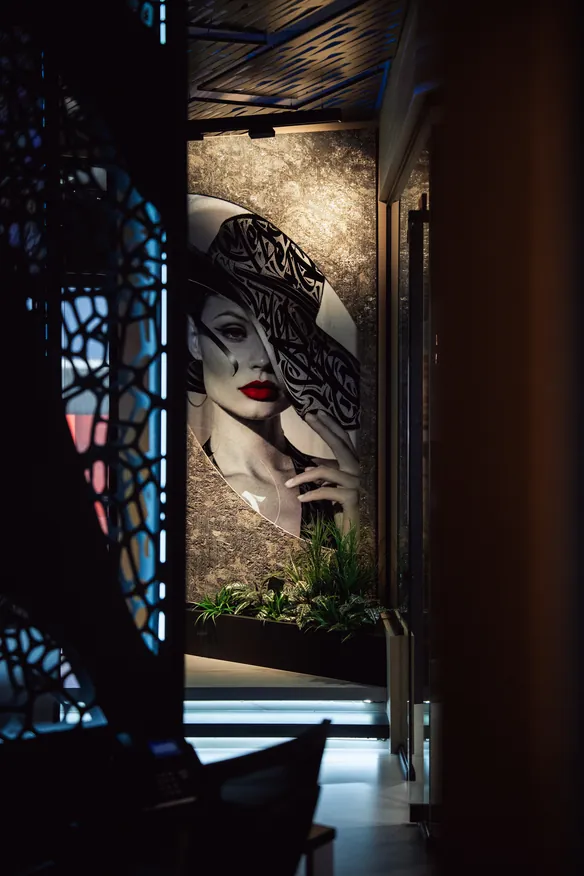
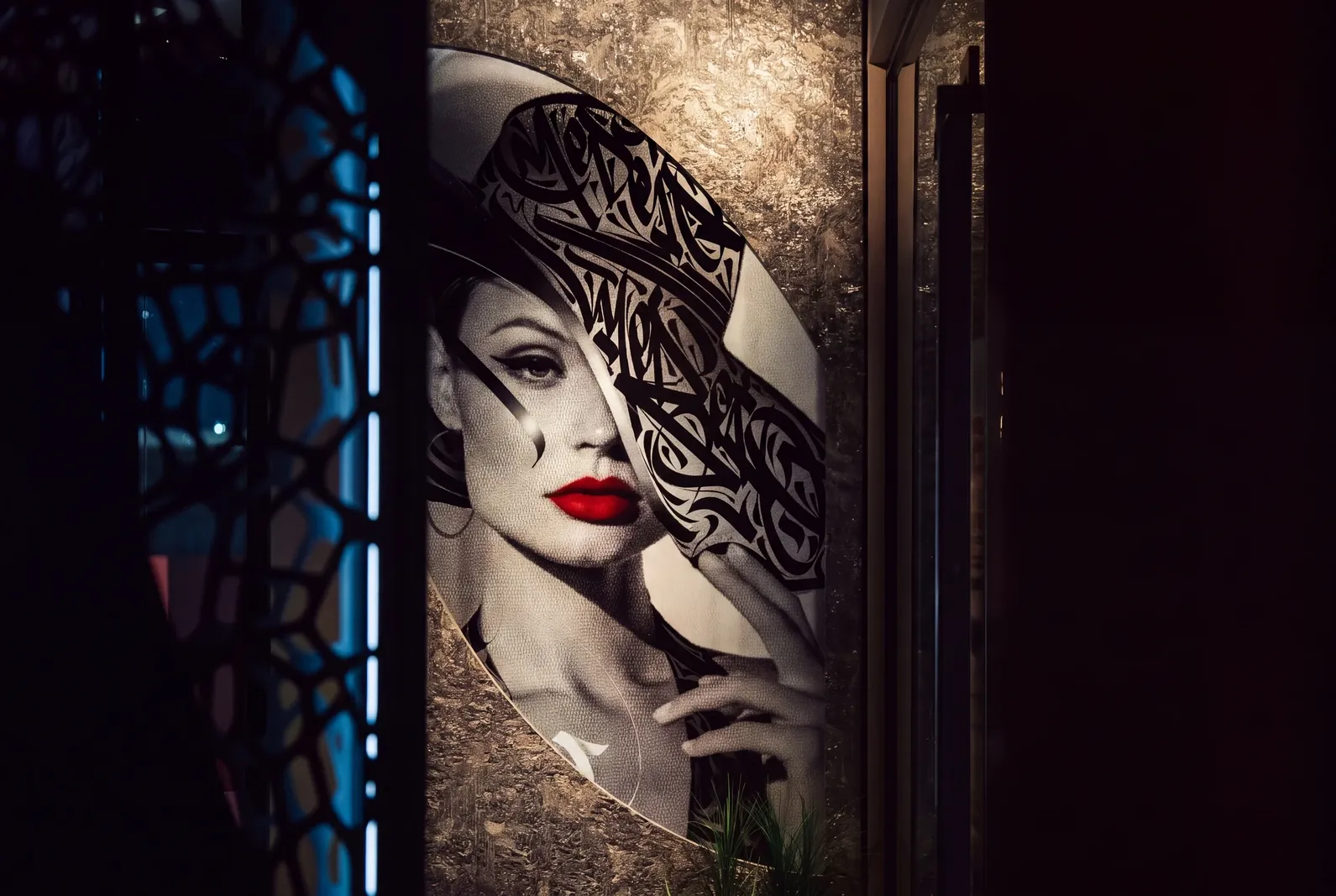
At the centre of the panel sits a portrait of Sophia Loren — vivid lips, the unmistakable poise of one of Italian cinema’s enduring icons.
What surrounds it elevates it further.
The portrait is framed by Kosmus, a granite of deep blacks and silvers, threaded with subtle hints of golden orange. The stone reads as galactic; the portrait, luminous against it.
Kosmus is finished here in a stratos-pattern relief: long parallel grooves that catch and release shadow as the eye travels across. Architectural rhythm laid over geological depth.
Together, the print and the stone do something neither could do alone. The image gains weight from the geology that holds it. The stone gains intent from the image at its centre.
This is what creativity looks like when materials are taken seriously. The setting is not a backdrop. The setting is the subject.
Design without limits
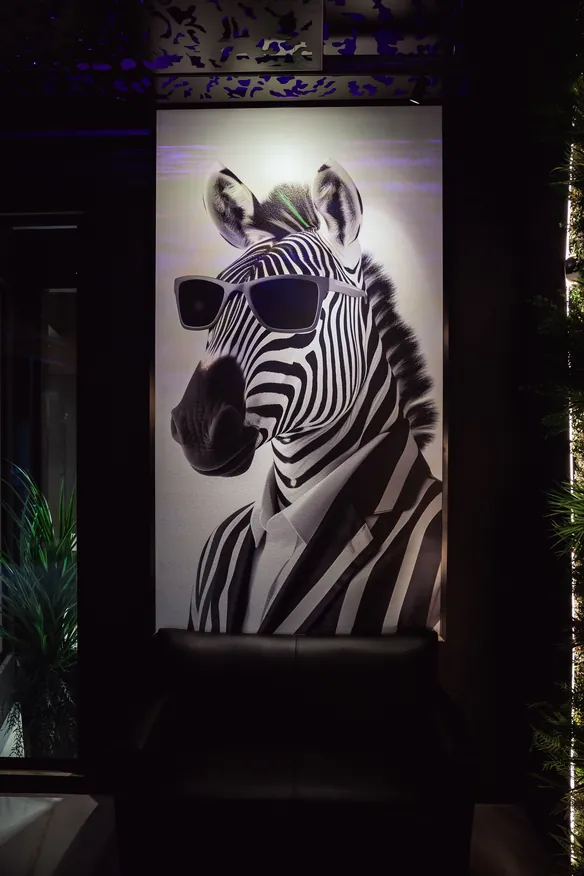
A tall portrait of a zebra in a tailored striped suit and dark sunglasses sits inside a recessed alcove. It is one of the Galleria’s most photographed installations.
It was made for the Interior Design Show. The brief was simple: embody “design without limits.” Something playful, something fashion-forward, something that signals that AGL’s materials don’t only belong in restraint.
The unexpected detail is the medium. The zebra is rendered directly onto sintered stone — a surface most often specified for façades, floors, and countertops, here lit theatrically to read as portraiture rather than cladding.
It is the Galleria’s most direct argument that material is medium. The same stones that anchor an interior wall can also carry a joke, a wink, a personality — right down to the few blades of grass sprouting from the zebra’s head, a quiet nod to AGL Grass.
Design without limits is the line. The zebra is the punctuation.
In closing
The seven works in the Galleria are not displayed. They are demonstrating.
Each one isolates a different relationship between material and light: how shadow turns a slab into a sculpture, how backlight turns stone into atmosphere, how craft from another continent can sit beside Ontario steel without dissonance.
Architecture is often described as a study of what we can control. Inside the Galleria, we begin with an appreciation for what we cannot. Geology. Light. Time. The hand of the maker.
What we curate is the meeting point.
The best surfaces are not specified. They’re understood. The Galleria is where that understanding begins.
Ivan Couto — President, AGL Surfaces
The Galleria is open to architects, designers, and clients by appointment.
Continue reading.
All editorials → Material Intelligence · 6 min
Sintered Stone vs. Quartz
Sintered stone vs. quartz u2014 a composition-level comparison covering heat, UV, outdoor performance, stain resistance, maintenance, and when to specify each.
Material Intelligence · 6 min
Sintered Stone vs. Quartz
Sintered stone vs. quartz u2014 a composition-level comparison covering heat, UV, outdoor performance, stain resistance, maintenance, and when to specify each.
 Material Study · 6 min
The Translucent Quartz
Cristallo is the natural quartz that doesn't behave like stone. It accepts light, holds it, and lets it through. A Material Study…
Material Study · 6 min
The Translucent Quartz
Cristallo is the natural quartz that doesn't behave like stone. It accepts light, holds it, and lets it through. A Material Study…
 Material Study · 6 min
The Stone That Doesn’t Burn
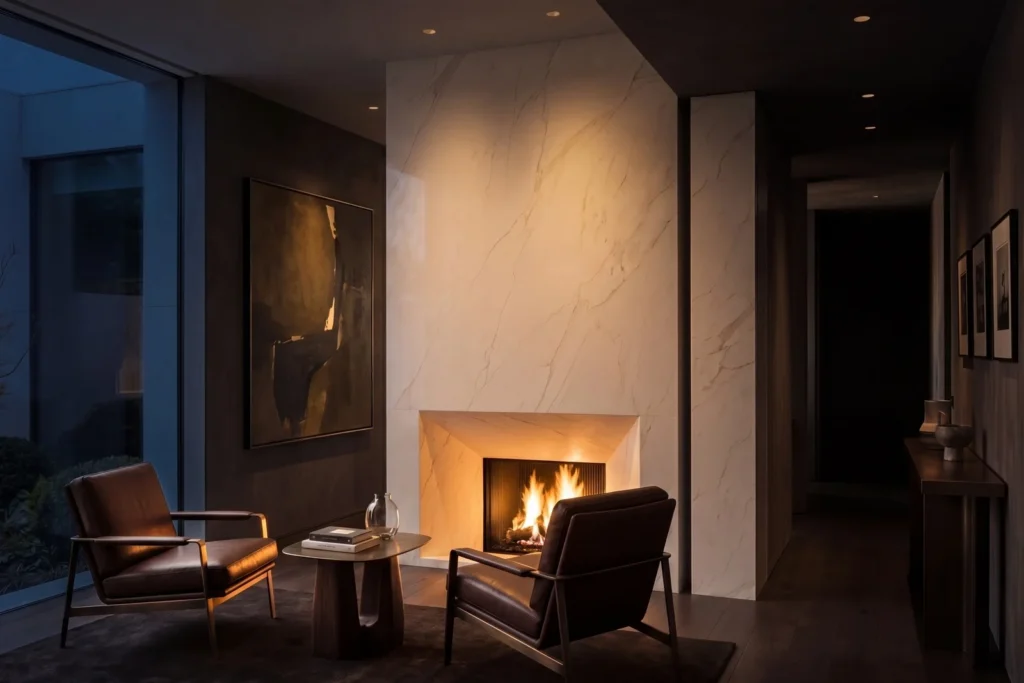
Sintered stone is non-combustible by composition u2014 pure mineral, no resins, no organic content. A Material Study on the surface engineered for…
Material Study · 6 min
The Stone That Doesn’t Burn
Sintered stone is non-combustible by composition u2014 pure mineral, no resins, no organic content. A Material Study on the surface engineered for…