
Waterfall Countertops in Sintered Stone
What a waterfall edge is, why sintered stone in jumbo slabs suits it, what to weigh before you choose one, and five designs that carry their veining over the edge.
In this editorial
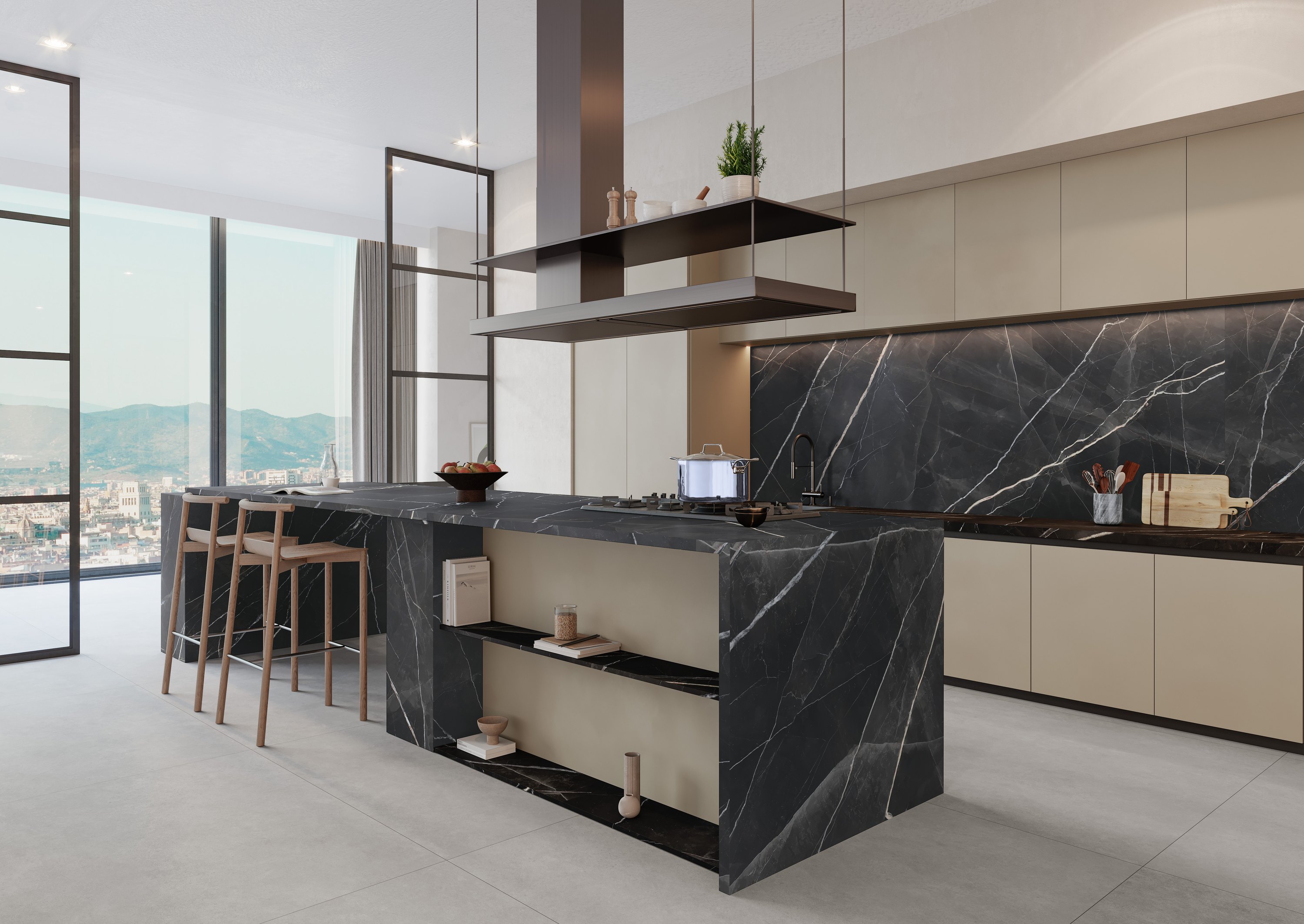
A waterfall countertop is a worktop that does not stop at the end of the island. It turns down at a sharp corner and runs to the floor, so the island reads as one block of material rather than a cabinet with a top on it. In sintered stone, the jumbo slab lets the worktop and the drop come from the same surface, with the veining carried over the edge.
A guide for designers, and for homeowners working with one: what a waterfall edge is, when it earns its place, and how to choose the material and the design.
What a waterfall edge is
On a standard island, the worktop sits on the cabinets and ends at an edge profile. On a waterfall island, the worktop continues: at one or both ends, a vertical panel of the same material drops from the top surface to the floor.
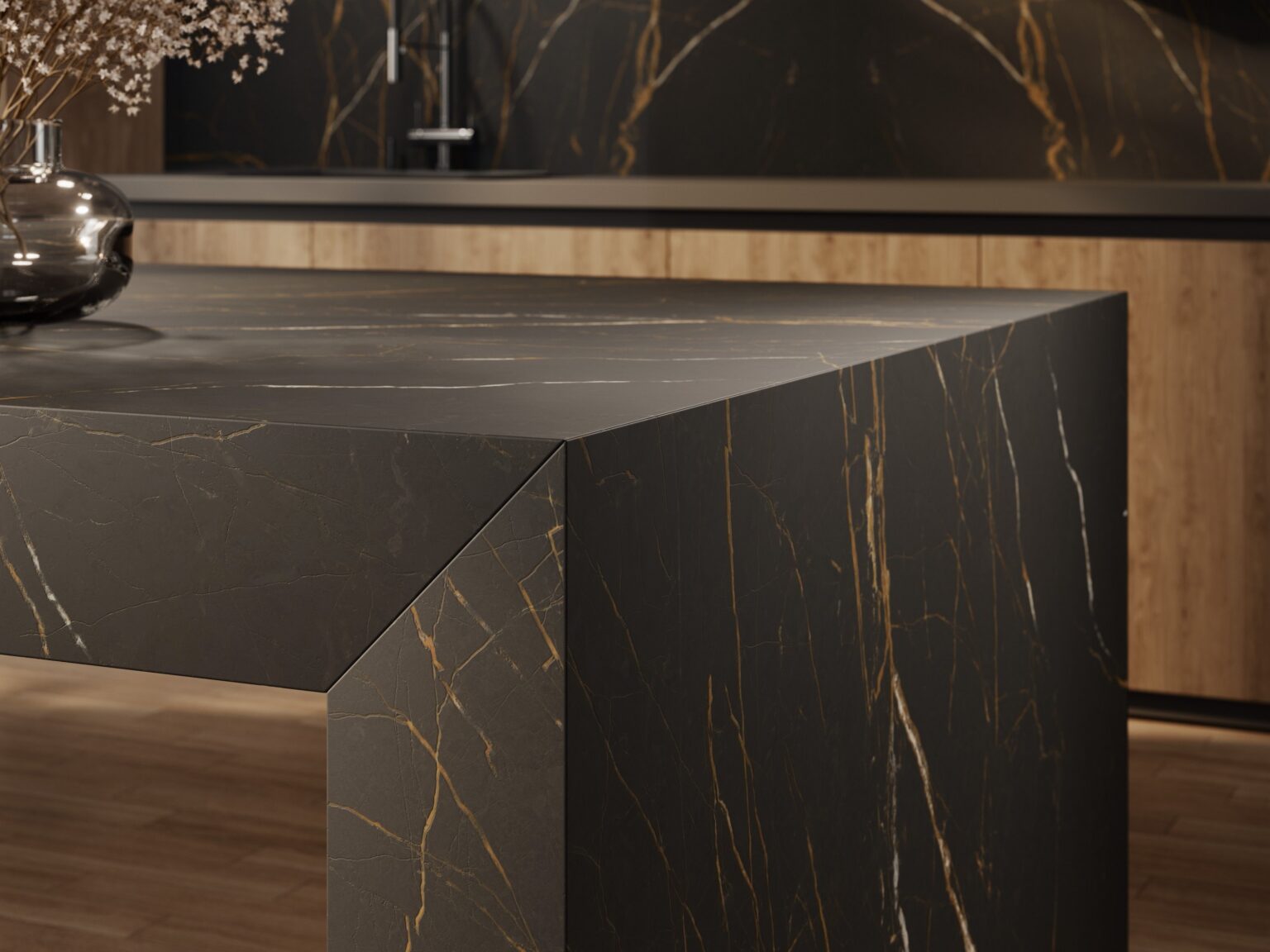
The two pieces meet at a mitred corner. Each edge is cut at an angle so the joint sits exactly on the corner, and the surface appears to fold rather than stop. Done well, the joint almost disappears, and the pattern on the top flows down the side without a break.
That is the whole idea: one material, one gesture, from worktop to floor. It turns the island from furniture into architecture, which is why it so often anchors an open kitchen.
Why sintered stone suits it
Large enough to carry the line. Sintered stone comes in jumbo slabs of 3200 × 1600 mm. On many islands, that is enough surface to cut the worktop and the drop from consecutive parts of the slab, so the veining that crosses the top continues down the side.
Bookmatched designs. Many designs in the collection are offered as bookmatch sets, where neighbouring slabs mirror each other. On a large island, or one with two waterfall ends, a bookmatch lets the pattern stay symmetrical across the whole piece.
Thicknesses for the build. Slabs come in 6, 12 and 20 mm. Not every design comes in every thickness, so confirm it on the design’s page before you specify.
The same surface on every face. Sintered stone is non-porous, so it resists stains, moisture and chemicals without sealing. It is heat- and scratch-resistant, and resin-free, made only of natural minerals. Hot cookware sets down directly on the worktop: no resins to scorch, no sealant to renew. The vertical face needs no different care from the top, which matters when the drop sits beside a stool or a busy walkway.
If the island is a choice between sintered stone and quartz, the difference is composition: sintered stone vs. quartz, compared point by point.
Things to weigh
A waterfall edge is a strong decision, and not the right one for every kitchen. Before you commit, consider:
More material. A waterfall end adds a full-height panel for every side that drops to the floor. The island uses more surface than a standard top, and that is part of the design brief from the start.
The mitre is skilled work. The corner is cut and joined by the fabricator, not by AGL. A clean mitre with continuous veining takes a shop that works with sintered stone and plans the cuts from the slab before anything is cut. AGL’s Preferred Partner fabricators know the material.
The edge lives at floor level. The bottom of the drop meets feet, chairs, vacuums and bags. Plan the clearance and the floor detail where the panel lands.
It is a visual decision first. A waterfall makes the island the focal point of the room. In a quiet kitchen that can be exactly the point; next to a busy backsplash or a strong floor, it can be one gesture too many.
One end or both. A single waterfall end frames the island from the main approach. Two ends make it read as a monolith. Seating, circulation and how the island is seen from the rest of the space usually decide it.
Choosing a design
The detail rewards designs whose movement reads across a corner: long veining that runs the length of the slab, or a pattern scaled big enough to carry over a full drop. Five from the collection, each offered as a bookmatch:
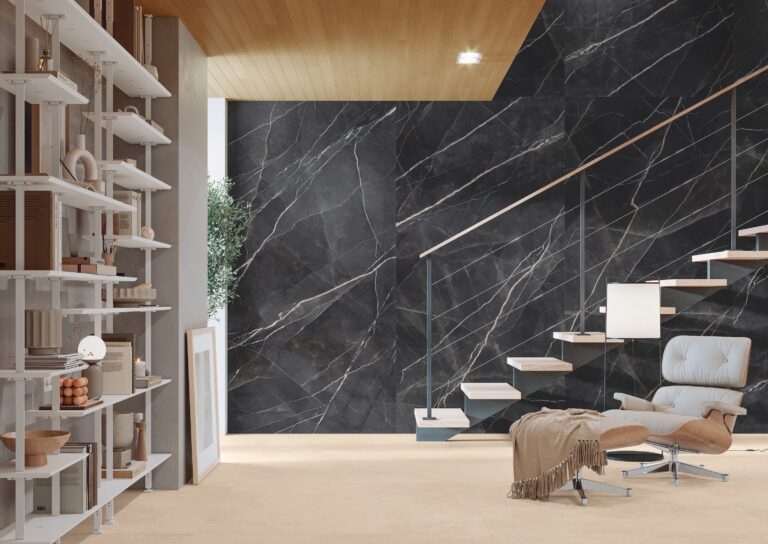
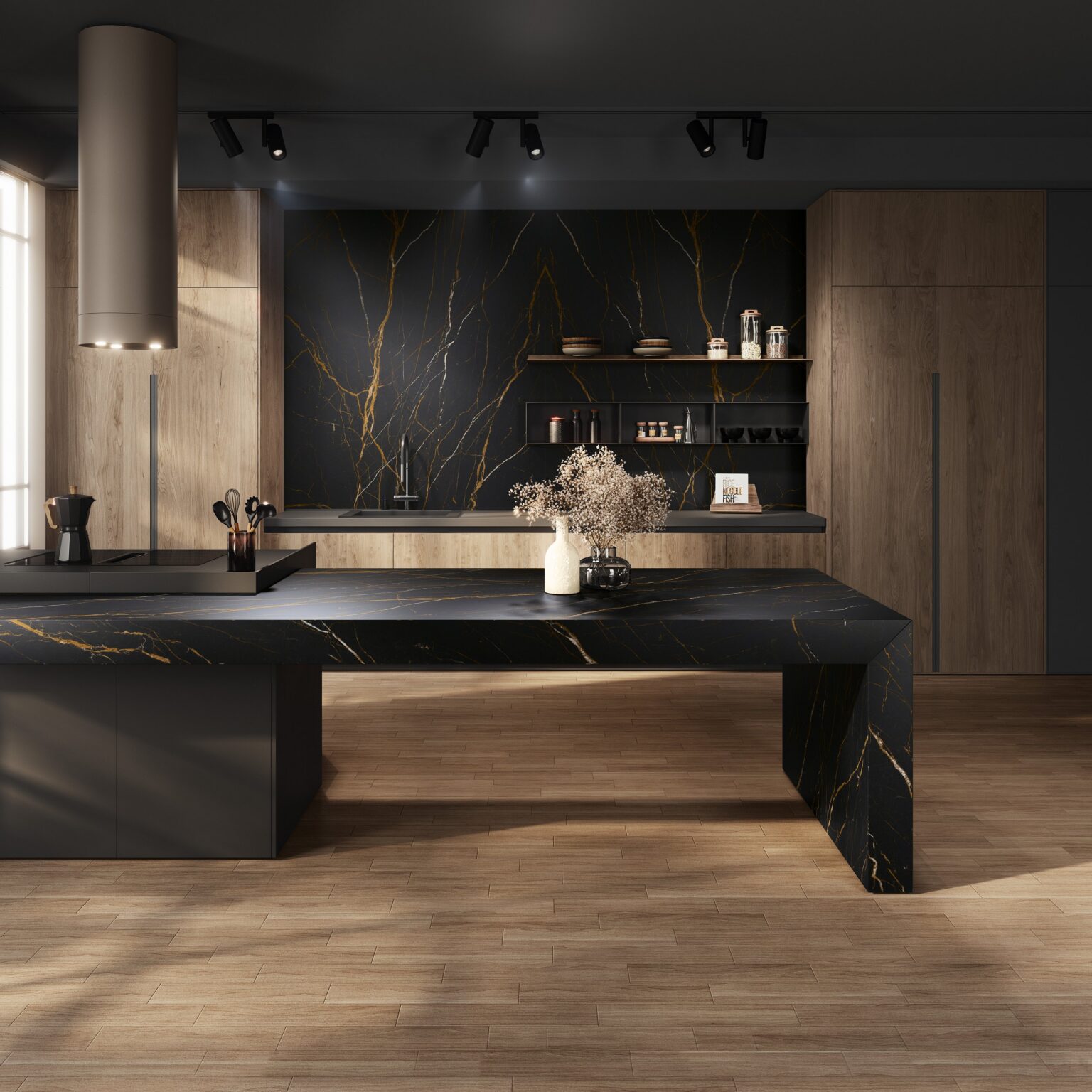
Notturna. A deep charcoal field crossed by white and gold veining in long, uninterrupted lines. The catalogue names waterfall edges among the places it works at scale. In 6, 12 and 20 mm.
Intarsio. Large angular forms fitted against one another, pale grey and white set into a darker ground. The pattern is unusually big, so it wants a full plane: a waterfall is one of the surfaces the catalogue gives it. In 6 and 12 mm.
Ardito. Gold and white veining against a brown so dark it reads as black, running irregularly so a large format never looks mechanical. Suited to island faces. In 6, 12 and 20 mm.
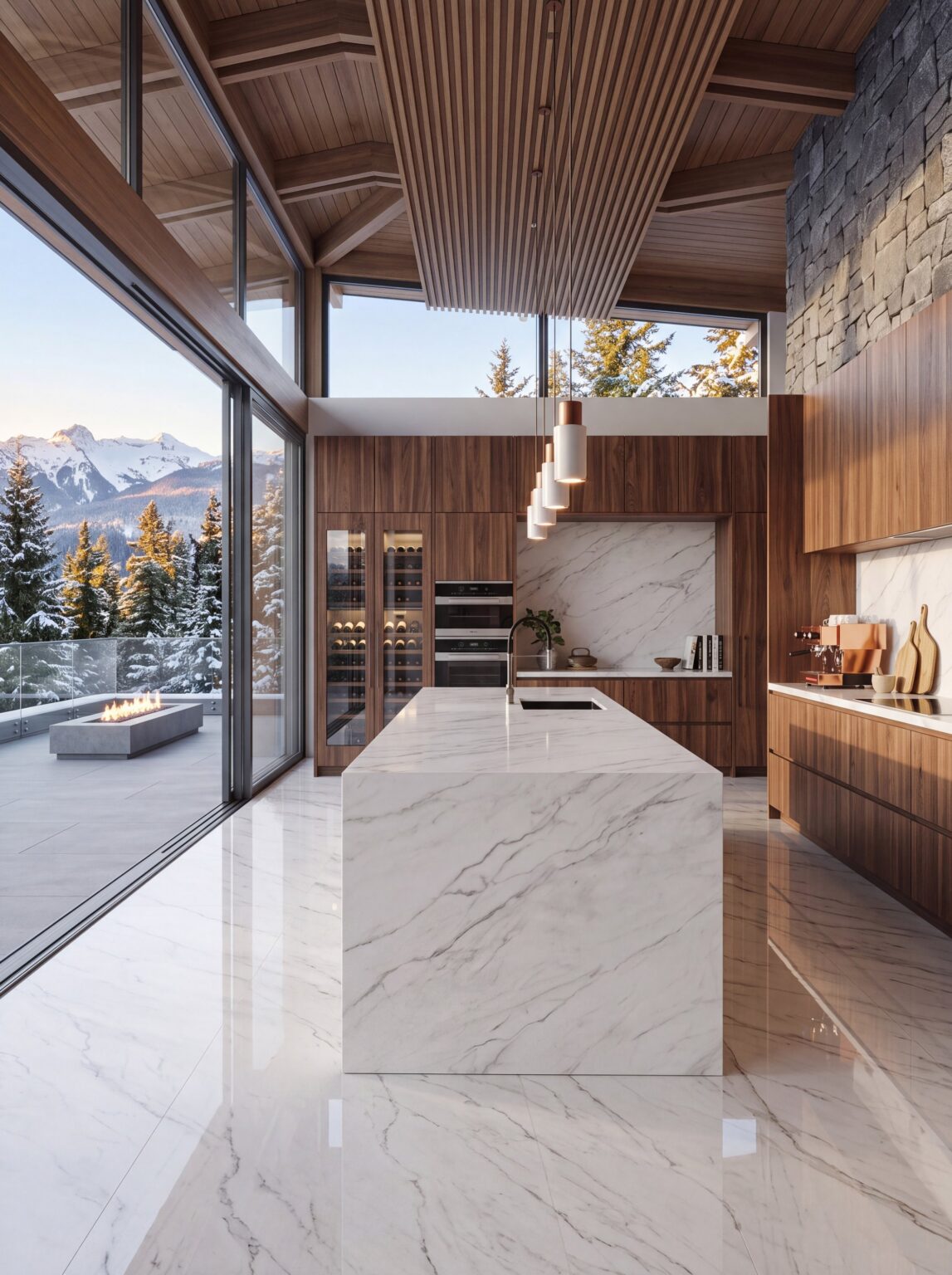
Perenne. Broad grey veining on a bright white ground, drawn heavier than the rest of the family, so it holds its depth at a distance and across a full drop. In 6, 12 and 20 mm.
Vespro. A deep black ground cut by narrow white veining in clean, decisive lines; the catalogue calls it punctuation for a single island. In 6 and 12 mm.
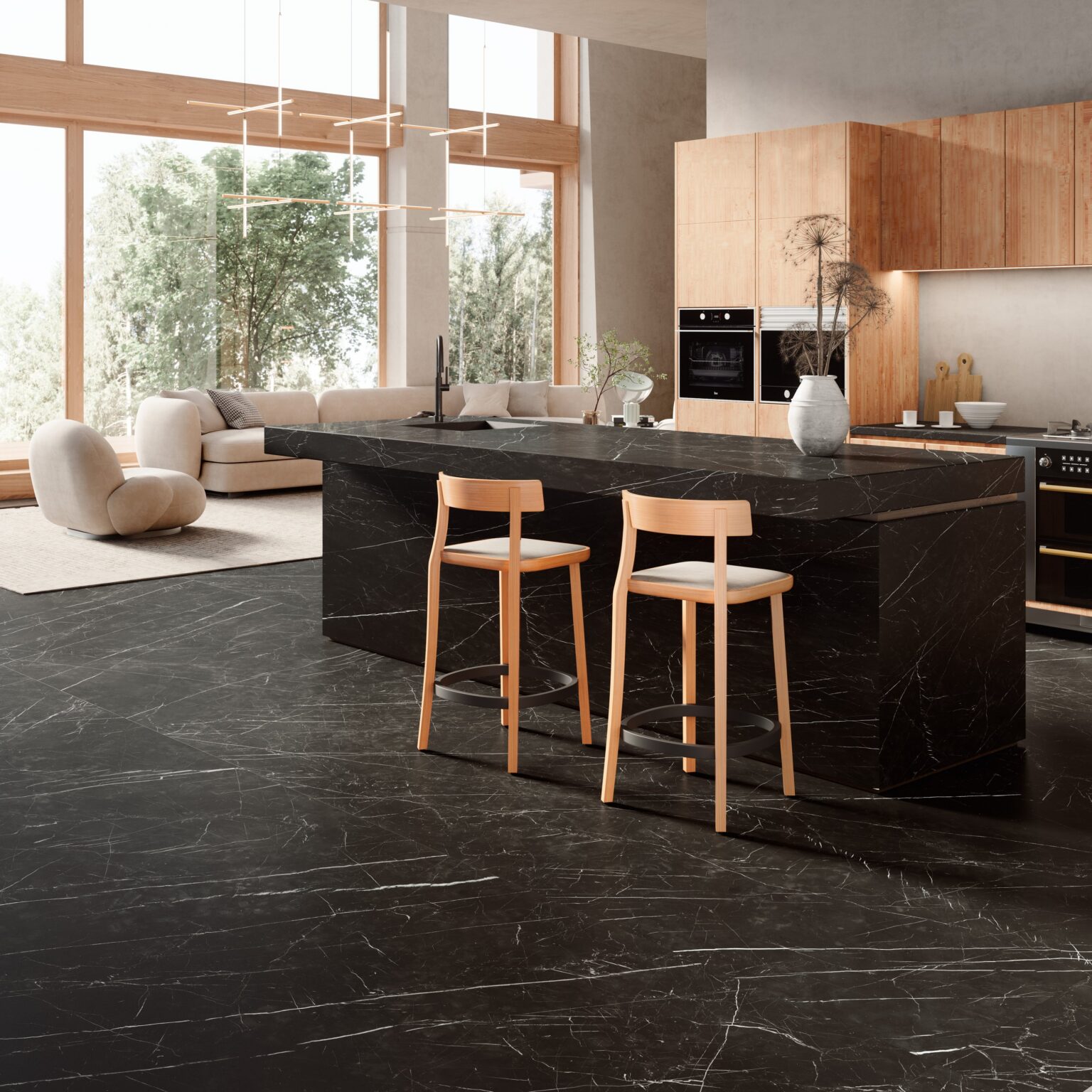
See it full size
A waterfall is judged at full scale, not from a sample in the hand. See sintered stone in person at the Galleria in Stoney Creek, Ontario, Monday to Friday, 9:00 to 5:00, no appointment needed, and talk the island through with our team. Samples help you check the finish and colour at home, and our Preferred Partner fabricators can take the design from slab to installed island.
Questions
What is a waterfall countertop?
A worktop that turns down at the end of an island and runs to the floor in the same material, joined at a mitred corner.
Is a waterfall countertop worth it?
It is a design choice more than a practical one. It uses more material and needs skilled fabrication, and in return the island reads as one solid piece and becomes the focal point of the kitchen.
Can sintered stone be used for a waterfall island?
Yes. Jumbo slabs of 3200 × 1600 mm, bookmatched designs and a non-porous, heat- and scratch-resistant surface suit it; a fabricator cuts and joins the mitre.
Do both sides need a waterfall?
No. One end is common, framing the island from the main approach; both ends make it read as a single block. The layout and seating usually decide.
Continue reading.
All editorials →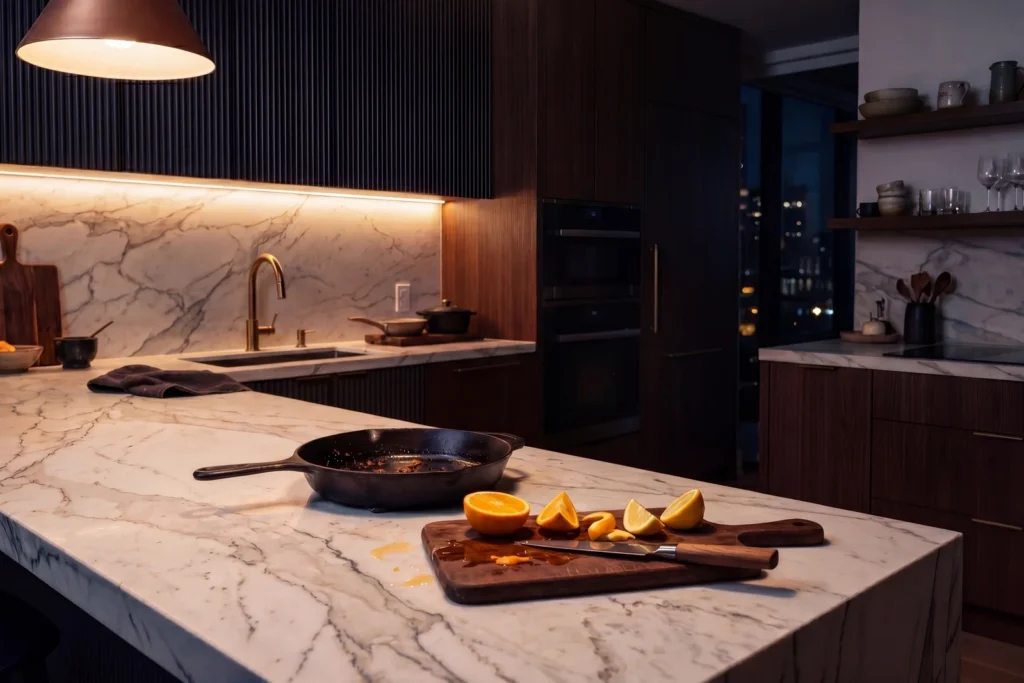 Material Intelligence · 7 min
Sintered Stone vs. Quartz
Sintered stone vs. quartz, compared by composition: heat, UV, outdoor use, stains, maintenance, cost and when to specify each.
 Galleria Editorial · 7 min
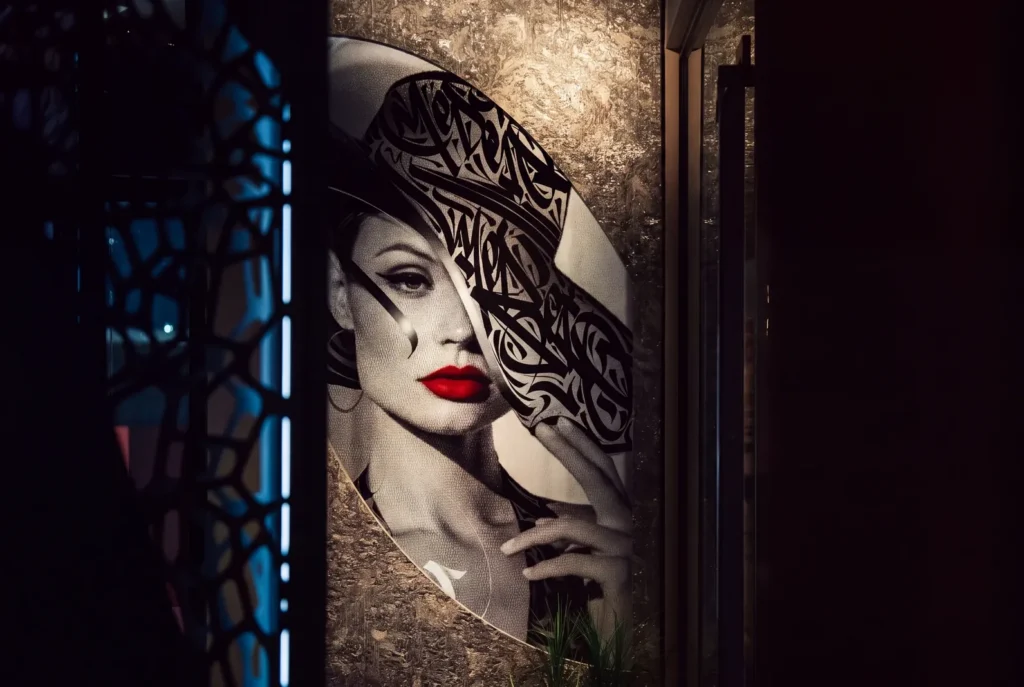
The Anatomy of Light & Surface
A study in seven installations from inside the AGL Galleria: how light, shadow, and craft turn natural stone, sintered surfaces, and metalwork…
 Material Study · 6 min
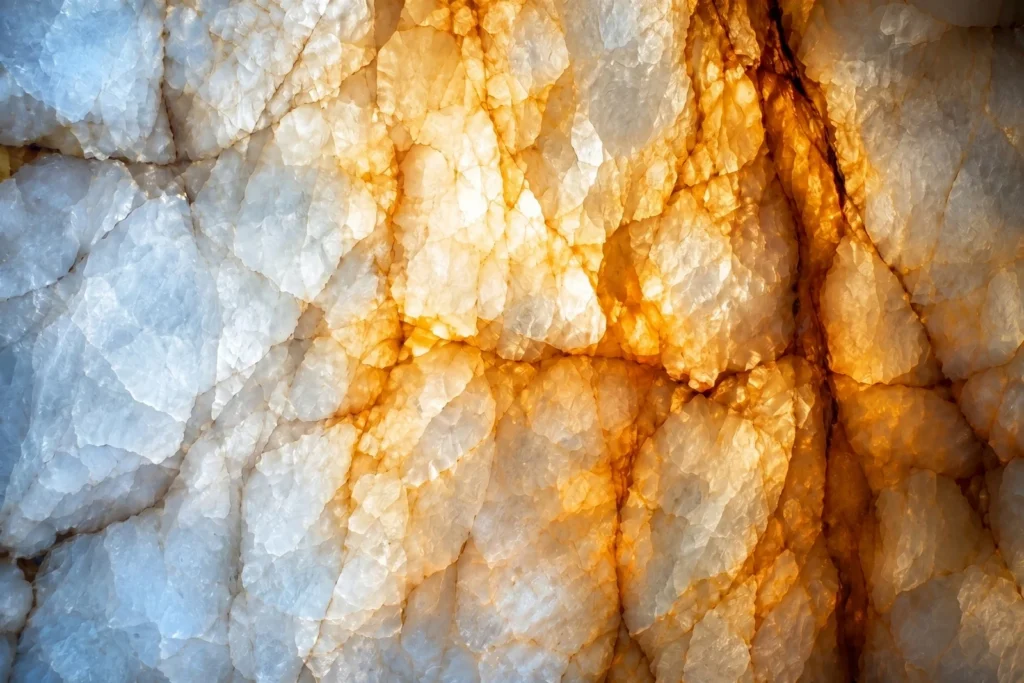
The Translucent Quartz
Cristallo is the natural quartz that doesn't behave like stone. It accepts light, holds it, and lets it through. A Material Study…